Cupping & Hijama Therapy in Bommanahalli, Bengaluru: Natural Relief for Pain, Stiffness and Fatigue
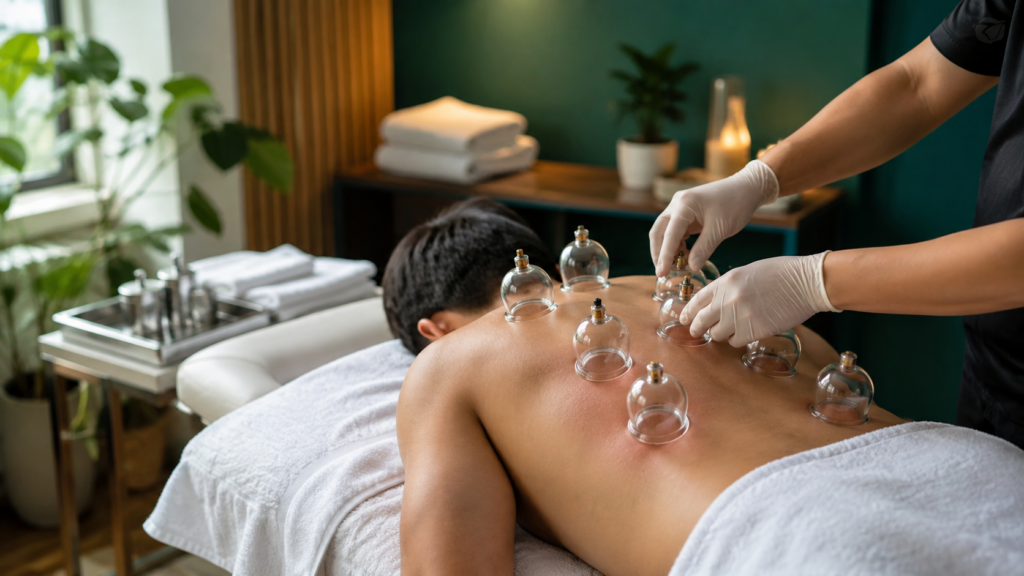
Cupping & Hijama Therapy · Bommanahalli, Bengaluru Natural Relief for Pain, Stiffness and Everyday Fatigue Certified dry cupping and wet cupping (Hijama) that eases deep muscle tension, improves circulation, and helps your body reset, without medication. Book Your Consultation Mon–Sat: 9 AM – 9 PM | Sun: 9 AM – 3 PM | +91 81055 86320 Some pain does not sit on the surface. It settles into the upper back after months of laptop work, tightens across the shoulders every evening, and turns into a dull heaviness you carry from Monday to Sunday. You stretch, you take a painkiller, you sleep it off, and by the next afternoon it is back exactly where it was. That is the kind of stubborn, circulation-related tension that Cupping & Hijama Therapy in Bommanahalli, Bengaluru is genuinely good at treating. At Dr. Gomathi’s Physiotherapy on Bannerghatta Road, cupping is not offered as a standalone trend treatment. It is used as part of a proper clinical plan, after an assessment, alongside physiotherapy and movement correction, so the relief you feel actually lasts beyond the session. What Is Cupping Therapy, and How Is Hijama Different? Cupping is one of the oldest recorded forms of manual therapy, practised for centuries across Asia and the Middle East, and now widely used in modern sports medicine and physiotherapy. Special cups are placed on the skin and a vacuum is created inside them. Instead of pressing tissue down the way a massage does, cupping gently lifts the skin, fascia and superficial muscle upward. That upward pull decompresses tight fascia, opens up restricted blood flow, and helps flush stagnant fluid out of an area that has been locked up for weeks or months. Patients often describe it as a strange but deeply satisfying pull, followed by a lightness in the area that painkillers never quite give them. Dry Cupping Cups are applied to the skin using suction and left in place for a few minutes, or slid along the muscle with oil (known as gliding or moving cupping). No incisions are made and no blood is drawn. This is the version most commonly used for muscular pain, sports recovery, and desk-job stiffness. Wet Cupping (Hijama) After a short round of dry suction, the practitioner makes very fine, superficial scratches on the skin and reapplies the cup to draw out a small amount of stagnant blood. Done with sterile, single-use equipment, Hijama is traditionally used for detoxification, headaches, high stress load, and chronic congestion in a specific region. Both approaches are available at our clinic. Which one suits you depends on your condition, your medical history and your comfort level, and that decision is made during your assessment, not booked blindly off a price list. Conditions Cupping and Hijama Therapy Help With If you have been searching for cupping therapy near me or a Hijama centre near me in South Bengaluru, these are the concerns we treat most often: Chronic neck, shoulder and upper back stiffness from long desk hours Lower back pain, muscle spasm and postural strain Tension headaches and migraines linked to tight neck muscles Sciatica-related tightness and hip or glute discomfort Sports injuries, delayed muscle soreness and slow recovery between training days Frozen shoulder and restricted arm movement Knee pain, calf tightness and IT band restriction in runners Persistent fatigue, poor sleep and stress-related body heaviness Old injuries where scar tissue and adhesions limit free movement Whether you are an IT professional in Bommanahalli finishing back-to-back calls, a delivery rider spending nine hours on a two-wheeler across Bannerghatta Road traffic, a gym-goer near BTM Layout, or a homemaker in JP Nagar dealing with years of neck strain, the session is planned around your specific pattern of tightness. What Actually Happens During a Cupping Session Most first-time patients are nervous mainly because they do not know what to expect. Here is exactly how a visit runs at our clinic: Assessment and historyYour therapist checks your posture, range of motion and pain pattern, and asks about medical history, medication, blood pressure and any bleeding disorders. This step decides whether cupping is appropriate for you at all, and whether dry or wet cupping is the right choice. Preparing the areaThe treatment area is cleaned and, for gliding cupping, a light therapeutic oil is applied so the cups can move smoothly across the muscle. Applying suctionCups are placed over the tight regions and suction is adjusted to a level you are comfortable with. You will feel a firm pulling sensation, not a sharp pain. Cups usually stay on for five to ten minutes. Wet cupping step, only if indicatedFor Hijama, the cups are briefly removed, tiny superficial scratches are made with a sterile single-use blade, and the cup is reapplied for a short time. Everything is disposed of immediately after the session. Aftercare and dressingThe skin is cleaned and, where needed, dressed. You will be given simple aftercare instructions: stay hydrated, avoid heavy gym work and hot showers for around 24 hours, and keep the area clean. Follow-up planYour therapist explains how many sessions are realistically needed and which exercises or physiotherapy work should run alongside the cupping so the tightness does not simply return. About the round marks: The circular discolouration left behind is not a bruise from injury. It reflects where blood flow was congested under the skin. It is painless in most cases and generally fades within three to seven days. Areas with the most restriction usually mark the darkest, and those marks get lighter with each session as circulation improves. Benefits You Can Realistically Expect Faster relief in tight, knotted areas that hands-on massage struggles to reach Improved local blood flow, which supports the body’s own repair process Better range of motion in the neck, shoulders, back and hips Reduced muscle soreness and quicker recovery after training A calmer nervous system, with many patients reporting deeper sleep the same night Drug-free pain management, especially useful if you want to reduce dependence on painkillers We are honest about the