
Best Physiotherapy Clinic in Bengaluru: 9 Important Factors to Consider Before Choosing Your Rehabilitation Centre
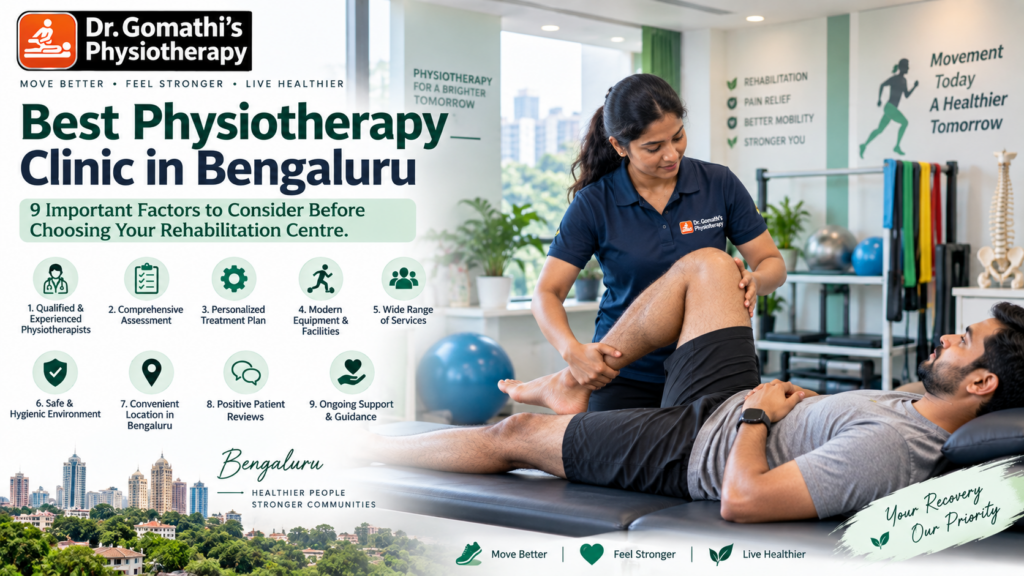
Physiotherapy & Rehabilitation · Bengaluru Best Physiotherapy Clinic in Bengaluru: 9 Important Factors to Consider Before Choosing Your Rehabilitation Centre Learn what to look for in a physiotherapy clinic, from proper assessment and personalized rehabilitation to available services, convenience and ongoing treatment support. Book Your Consultation Mon–Sat: 9 AM – 9 PM | Sun: 9 AM – 3 PM | +91 81055 86320 Choosing a physiotherapy clinic is an important step when pain, stiffness, an injury or reduced mobility begins affecting your everyday routine. The right rehabilitation environment should give attention to your individual condition rather than relying on the same treatment plan for everyone. If you are comparing options for the Best Physiotherapy Clinic in Bengaluru, looking at the assessment process, treatment options, rehabilitation approach, practitioner communication and clinic accessibility can help you make a more informed choice. Why Does the Choice of Physiotherapy Clinic Matter? Physiotherapy is not limited to a single appointment or one treatment technique. Depending on the condition, rehabilitation may involve assessment, movement work, strengthening, therapeutic exercise, education and regular progress reviews. Two people with similar symptoms may have very different physical requirements. One person may be recovering after an injury, another may have persistent stiffness from limited activity, while someone else may want support with returning to exercise. A clinic that takes time to understand these differences can make the rehabilitation plan more relevant to the person’s daily life and recovery goals. 9 Important Factors to Consider Before Choosing a Physiotherapy Centre Before booking an appointment, it is useful to compare a few practical factors. These can help you understand whether a clinic is appropriate for the type of physiotherapy and rehabilitation support you are looking for. Look for a Proper Initial Assessment A structured assessment should be one of the first things you consider. The physiotherapist may discuss your symptoms, previous injuries, daily activities and exercise routine before examining relevant movement, flexibility, mobility, strength and function. Check Whether Treatment Is Personalized A rehabilitation program should reflect your current physical condition and goals. The exercises and treatment approach may need to change as your mobility, strength or tolerance for activity improves. Consider the Clinic’s Rehabilitation Approach Find out whether the clinic focuses on long-term rehabilitation rather than concentrating only on short-term symptom management. A structured plan can include exercise, movement education, strengthening and gradual progression. Review the Services Available Different people may require different forms of physiotherapy. Check whether the clinic offers relevant treatment options that match your needs and whether additional therapies are available when appropriate. Ask About Practitioner Communication You should feel comfortable asking questions about your condition, treatment and exercises. Clear explanations can make it easier to understand the purpose of each part of the rehabilitation process. Consider Progress Monitoring Rehabilitation is not always a straight line. A useful treatment plan can be reviewed and modified according to changes in symptoms, movement, strength and everyday function. Check the Clinic’s Location Convenience can make regular appointments easier to maintain. Consider how practical the clinic is from your home, workplace or daily travel route. Review Appointment Availability A clinic with appointment times that fit your schedule may make it easier to maintain consistency throughout the rehabilitation process. Understand the Overall Treatment Plan Before starting, ask how the physiotherapist expects the rehabilitation process to work, what your role will be between appointments and how progress will be reviewed. Why Is Personalized Physiotherapy Important? Personalization matters because every person’s physical condition is different. Age, activity level, work routine, previous injuries, mobility and recovery goals can all influence the way treatment is planned. For example, an office worker who spends many hours sitting may need a different rehabilitation strategy from an individual returning to sports after an injury. Someone with reduced mobility may also have different goals from a person who wants to improve strength and movement confidence. A personalized approach allows the physiotherapist to select exercises and treatment methods according to the individual’s requirements instead of following one fixed routine. What Can You Expect From an Advanced Physiotherapy Clinic in Bengaluru? When searching for an Advanced Physiotherapy Clinic in Bengaluru, it is useful to focus on the quality of the overall rehabilitation process rather than the label alone. An appropriate physiotherapy program may include detailed assessment, therapeutic exercise, mobility work, strengthening, movement education and other techniques selected according to the person’s needs. At Dr. Gomathi’s Physiotherapy, the treatment approach is centered around personalized physiotherapy and rehabilitation based on individual symptoms, physical assessment and recovery requirements. What Services Should a Physiotherapy Clinic Offer? The services available at a physiotherapy clinic can be another useful point of comparison. Depending on your individual condition, treatment may involve exercise-based rehabilitation together with other physiotherapy techniques. According to the supplied clinic information, Dr. Gomathi’s Physiotherapy provides physiotherapy and rehabilitation along with additional therapy options. Personalized physiotherapy assessment Therapeutic exercise and rehabilitation Mobility and strengthening support Dry Needling IASTM Therapy Acupuncture Reflexology Cupping and wellness-focused services Not every treatment is appropriate for every individual. The suitability of a particular therapy should be discussed with the treating professional after considering your condition. How Does a Physiotherapy Assessment Usually Work? The first assessment can provide useful information about your physical condition and help determine the direction of your rehabilitation. Discuss your main concern. You may be asked when the problem began, what activities affect it and how it is influencing your normal routine. Review your lifestyle and activity. Your work routine, exercise habits, previous injuries and daily movement may be considered as part of the assessment. Evaluate relevant physical factors. Depending on your condition, the physiotherapist may assess movement, flexibility, mobility, strength and function. Build an individual plan. The treatment and exercises can then be selected around your present physical needs and recovery objectives. Monitor your response. Your rehabilitation plan can be adjusted as your symptoms and physical abilities change. Why Should Exercise Be Part of Rehabilitation? Exercise can play an important role in rehabilitation because improving physical capacity often requires gradual
Physiotherapy Clinic in Bommanahalli, Bengaluru: Personalized Pain Relief, Rehabilitation & Better Mobility
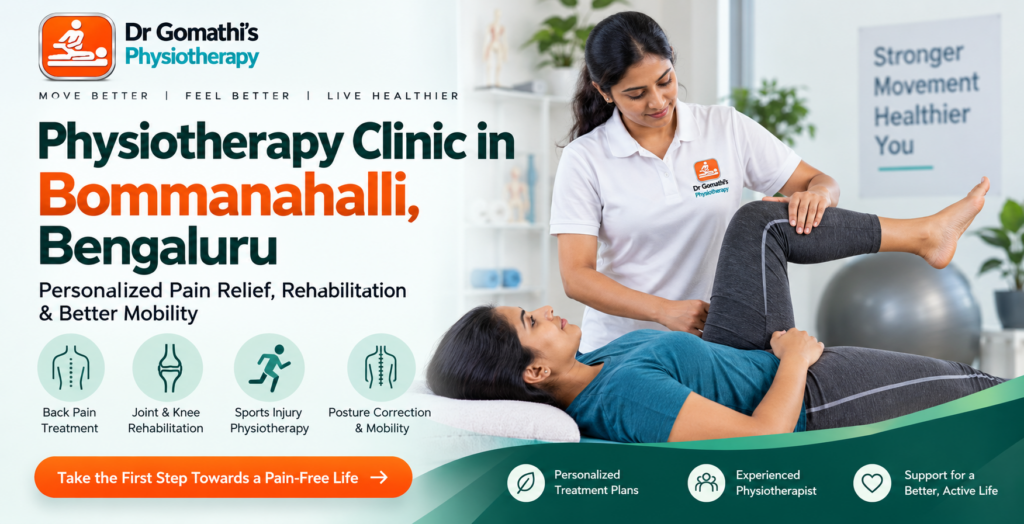
Personalized Physiotherapy · Bommanahalli, Bengaluru Physiotherapy Clinic in Bommanahalli, Bengaluru Personalized physiotherapy and rehabilitation designed to help you manage pain, improve movement, rebuild strength and return to the activities that matter to you. Book Your Consultation Mon–Sat: 9 AM – 9 PM | Sun: 9 AM – 3 PM | +91 81055 86320 Dealing with back pain, neck stiffness, knee discomfort, a sports injury or difficulty moving comfortably can affect almost every part of your day. Work becomes harder, exercise may feel uncomfortable and even simple activities can require extra effort. If you are looking for a physiotherapy clinic in Bommanahalli, choosing a clinic that understands your individual condition is an important first step. At Dr. Gomathi’s Physiotherapy, the focus is on personalized physiotherapy, rehabilitation and supportive therapies based on the individual’s needs, symptoms and recovery goals. Why Physiotherapy Can Make a Difference Pain is often the body’s way of telling you that something needs attention. Sometimes it follows an obvious injury. In other cases, it develops gradually after months of prolonged sitting, repetitive movements, poor posture, reduced physical activity or changes in strength and mobility. Many people try to ignore discomfort until it starts interfering with normal life. They may change the way they walk, avoid stairs, stop exercising or adjust how they sit and sleep. Although these changes can feel helpful temporarily, avoiding movement altogether may not address the reason the problem keeps coming back. Physiotherapy takes a different approach. Instead of looking only at the painful area, a physiotherapist can assess movement, strength, flexibility, posture and functional limitations. This information helps create a treatment plan that is relevant to the individual rather than using exactly the same routine for everyone. At Dr. Gomathi’s Physiotherapy, treatment is designed around the person’s condition and goals, with the aim of supporting better movement, improved physical function and long-term management. Conditions Commonly Managed Through Physiotherapy People visit a physiotherapist in Bommanahalli for many different reasons. Some are recovering from an injury, while others have been living with recurring discomfort for months or years. Back pain related to muscle strain, movement problems or prolonged sitting Neck pain and stiffness associated with posture, screen use and restricted movement Shoulder pain and difficulty with everyday arm movements Knee pain affecting walking, stairs, exercise or standing Joint stiffness affecting normal movement and flexibility Sports injuries requiring structured rehabilitation before returning to activity Mobility and balance concerns affecting confidence during everyday activities Post-injury rehabilitation to gradually restore strength and function Post-surgical rehabilitation when physiotherapy has been recommended as part of recovery Posture-related discomfort commonly experienced by people who spend long hours at a desk The appropriate treatment depends on the individual’s symptoms and assessment. You can explore the clinic’s physiotherapy and rehabilitation services to learn more about the approach. Back Pain Physiotherapy in Bommanahalli Back pain can make ordinary activities surprisingly difficult. Sitting at work, bending down, travelling, sleeping or standing for long periods may become uncomfortable. While occasional discomfort may settle with appropriate rest and activity modification, recurring or persistent back pain deserves attention. A physiotherapy assessment can examine factors such as mobility, muscle strength, movement patterns and functional habits. A rehabilitation plan may include therapeutic exercises, mobility work, strengthening and other physiotherapy techniques depending on the individual’s condition. If you are searching online for back pain physiotherapy in Bommanahalli, the important thing is not simply finding a clinic nearby. It is finding professional care that takes time to understand why the problem is affecting you and what you want to achieve from treatment. Neck and Shoulder Pain Physiotherapy Bengaluru’s working lifestyle means many people spend several hours every day in front of computers, laptops and mobile devices. Over time, prolonged static positions can contribute to neck stiffness, upper-back discomfort and shoulder problems. Physiotherapy can help identify movement restrictions and strength or flexibility issues that may be contributing to discomfort. Treatment can then be progressed according to the individual’s needs. Rather than concentrating only on the location where pain is felt, a complete assessment considers how the neck, shoulders and upper back work together. Knee Pain and Mobility Rehabilitation Knee discomfort can affect people at very different stages of life. It may follow a sports injury, physical strain or surgery, or it may develop gradually as movement patterns and strength change. Simple activities such as climbing stairs, getting up from a chair, walking for longer distances or exercising can become difficult when knee movement is limited. Physiotherapy may focus on improving strength, flexibility, balance, mobility and functional movement. The exact rehabilitation programme should always be based on an individual’s condition rather than a one-size-fits-all exercise routine. Sports Injury Physiotherapy in Bommanahalli Staying active is important, but sports and exercise can sometimes lead to muscle strains, joint injuries, tendon problems and other physical setbacks. One of the biggest mistakes after an injury is returning to demanding activity too quickly simply because the pain has reduced. The body may still need time to rebuild strength, coordination and tolerance. Physiotherapy rehabilitation can provide a structured pathway from the early stages of recovery towards normal activity. Exercises can be progressed gradually according to strength, movement and functional ability. For people searching for sports injury physiotherapy in Bommanahalli, a personalized rehabilitation plan can be particularly useful for returning to exercise with greater confidence. Our Assessment-First Approach to Physiotherapy Good physiotherapy begins with understanding the person, not simply treating the painful body part. At Dr. Gomathi’s Physiotherapy, the treatment journey is centered around assessment, personalized care and progressive rehabilitation. Understand your concerns. Your symptoms, daily activities, previous injuries and treatment goals are discussed before creating a suitable plan. Assess movement and function. The assessment may consider posture, joint movement, muscle strength, flexibility and functional limitations. Create a personalized treatment plan. Treatment is selected according to your condition, current ability and recovery objectives. Work on movement and strength. Appropriate exercises and physiotherapy techniques can help improve physical function progressively. Provide practical guidance. Understanding how to move, work and perform daily activities