Top Physiotherapy Clinic in Bommanahalli: How to Choose the Right Treatment for Back, Neck, and Joint Pain
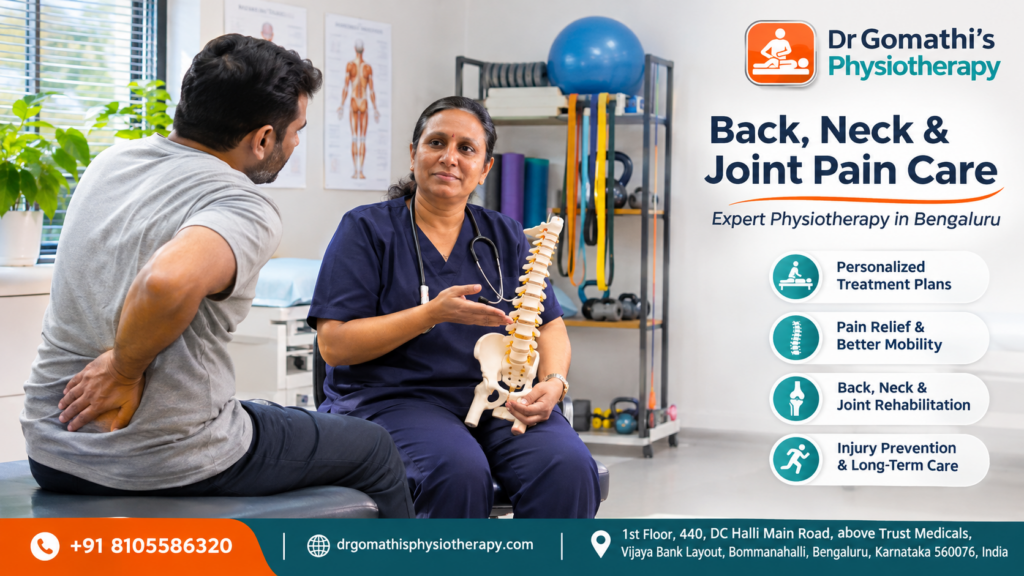
Physiotherapy and Rehabilitation · Bengaluru Choosing the Right Physiotherapy Treatment for Back, Neck and Joint Pain in Bommanahalli Understand common movement problems, explore suitable rehabilitation approaches and discover what to consider when selecting a physiotherapy clinic for your recovery. Book a Physiotherapy Consultation Bommanahalli, Bengaluru | Personalized Physiotherapy and Rehabilitation Are back pain, neck stiffness or joint discomfort making your everyday routine difficult? Choosing the right rehabilitation approach can make a meaningful difference to how you move, work and participate in daily activities. If you are looking for a Top Physiotherapy Clinic in Bommanahalli, understanding the treatment process, professional assessment and available rehabilitation options can help you make a more informed decision. Dr.Gomathi’s Physiotherapy clinic provides physiotherapy and rehabilitation services in Vijaya Bank Layout, Bengaluru, with attention to individual physical needs and recovery goals. Why Do Back, Neck and Joint Problems Affect Everyday Life? Musculoskeletal discomfort can influence much more than physical comfort. A stiff neck may make it difficult to turn your head while driving. Lower back discomfort can interfere with sitting through meetings or completing household activities. Knee or shoulder problems may make climbing stairs, lifting objects and exercising uncomfortable. These problems can develop gradually or appear following an injury, unusual physical activity or repetitive movements. Modern lifestyles can also contribute to physical difficulties. Long working hours, limited movement, extended screen use and inconsistent exercise routines may affect muscular strength and mobility. However, the location of discomfort does not always reveal its underlying cause. Two people experiencing similar symptoms may have different physical limitations and require different rehabilitation strategies. A professional assessment helps determine which factors need attention. Common Conditions That May Benefit From Physiotherapy Physiotherapy supports the management and rehabilitation of several musculoskeletal conditions. Treatment is selected according to the diagnosis, symptoms, physical assessment and individual goals. 1. Lower Back Pain Lower back discomfort may develop because of muscular strain, physical inactivity, repetitive movements, injury or other musculoskeletal conditions. Some individuals experience occasional stiffness, while others struggle with bending, walking, sitting or lifting everyday objects. Depending on the assessment, rehabilitation may involve strengthening exercises, mobility training, movement education and suitable manual techniques. The objective is to improve functional movement and help individuals gradually return to their usual activities. 2. Neck Pain and Shoulder Tension Extended computer use, frequent phone viewing and repetitive work activities can contribute to neck and shoulder discomfort. Restricted movement, muscular tightness and headaches may sometimes accompany these problems. Physiotherapy may include cervical mobility exercises, shoulder strengthening, movement retraining and advice on managing prolonged desk work. The treatment approach should consider the person’s symptoms rather than relying on one standard exercise routine. 3. Knee Pain and Joint Stiffness Knee discomfort can affect walking, climbing stairs, getting up from a chair and participating in sports. It may be associated with injuries, overuse, age-related joint changes or muscular weakness. A rehabilitation programme may focus on improving the strength of supporting muscles, joint mobility, balance and movement control. Exercises are progressed according to the individual’s ability and response. 4. Shoulder Pain and Restricted Movement Shoulder problems can make dressing, reaching overhead, carrying bags and sleeping comfortably more difficult. Depending on the cause, the shoulder may feel weak, stiff or painful during specific movements. Physiotherapy may help restore appropriate movement and strengthen supporting muscles. Treatment should be guided by an assessment to avoid exercises that are unsuitable for the condition. 5. Sports Injuries and Movement Difficulties Sudden increases in training intensity, inadequate preparation and accidental injuries can affect muscles, ligaments and joints. Returning to sports too quickly may also increase the risk of recurring problems. Sports rehabilitation can involve progressive strengthening, balance training, movement control and activity-specific exercises. The goal is to rebuild physical capacity before returning to demanding activities. How to Select the Right Physiotherapy Clinic in Bommanahalli Finding a clinic should involve more than comparing travelling distances or appointment prices. The quality of assessment, suitability of treatment and communication throughout rehabilitation are important considerations. When comparing a Best Physiotherapy Clinic in Bommanahalli with other available options, consider the following factors. 1. Individual Assessment Before Treatment A suitable physiotherapy approach begins with understanding your symptoms, medical history, physical abilities and daily activities. The professional should evaluate relevant movement patterns and discuss your concerns before recommending treatment. 2. Personalized Rehabilitation Plans Every person’s physical condition is different. Someone recovering from a knee injury may need a different programme from an office worker experiencing recurring neck stiffness. Look for a clinic that adjusts exercises and treatment methods according to individual requirements. 3. Clear Treatment Explanations You should understand what your treatment involves, why particular exercises are recommended and what improvements you are working towards. Clear communication helps patients participate more confidently in rehabilitation. 4. Focus on Functional Recovery Reducing discomfort is important, but rehabilitation should also consider everyday abilities. Walking comfortably, returning to work, climbing stairs, lifting objects and participating in recreational activities can all be relevant recovery goals. 5. Progress Monitoring Physical improvement should be reviewed throughout treatment. Changes in movement, strength, flexibility and daily function can help determine whether the rehabilitation plan needs adjustment. 6. Appropriate Professional Qualifications Check the physiotherapist’s qualifications, experience and approach to your particular condition. Treatment should be evidence-informed and appropriate for your medical and physical requirements. What Happens During a Physiotherapy Consultation? Understanding the first appointment can help you feel more comfortable about beginning treatment. Although the exact process varies, an initial consultation generally includes several important stages. Understanding your symptoms: The physiotherapist discusses where you experience discomfort, when it started and which activities make it better or worse. Reviewing your health history: Previous injuries, medical conditions, surgeries and ongoing treatments may be considered. Physical assessment: Relevant movements, flexibility, muscular strength, balance and functional abilities may be examined. Identifying treatment goals: Your daily requirements and recovery expectations help guide the rehabilitation plan. Recommending suitable treatment: The physiotherapist explains the exercises and techniques considered appropriate for your condition. Reviewing progress: Follow-up assessments help evaluate improvements and modify treatment when necessary. Different Physiotherapy