Cupping Therapy in Bommanahalli: How It Works, Potential Benefits and Safety Tips
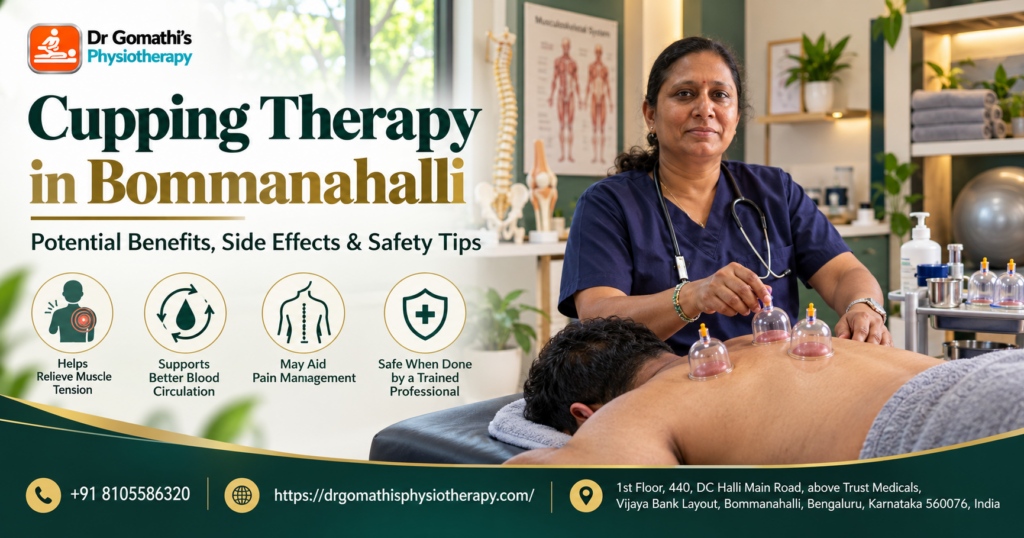
Cupping Therapy · Bommanahalli, Bengaluru Cupping Therapy in Bommanahalli: How It Works, Potential Benefits and Safety Tips Understand how cupping therapy works, why people consider it for muscle discomfort, its potential benefits, possible side effects and important safety precautions. Explore Cupping Therapy Bommanahalli, Bengaluru | +91 81055 86320 Can cupping therapy help with muscle pain and stiffness? Cupping is a complementary treatment that uses suction applied to the skin. Some people experience temporary pain relief following treatment, although scientific evidence for its effectiveness remains limited. If you are exploring Cupping Therapy in Bommanahalli , understanding the procedure, its possible benefits and safety considerations can help you decide whether to seek professional advice. At Dr.Gomathi’s Physiotherapy clinic, cupping and Hijama are among the therapy options listed by the clinic. What Is Cupping Therapy? Cupping therapy is a traditional practice used in different parts of the world. It involves placing specially designed cups against the skin and creating negative pressure, commonly called suction. The suction gently draws the skin and superficial tissues into the cup. This may produce temporary changes in local blood flow and skin appearance. Cupping is sometimes used as a complementary technique for musculoskeletal discomfort, including certain forms of back, neck and shoulder pain. However, it is important to distinguish traditional explanations of cupping from outcomes that have been demonstrated in clinical research. The technique has not been proven to remove toxins or cure underlying medical conditions. The usefulness of cupping depends on the person’s symptoms, health history and treatment goals. How Does Cupping Therapy Work? During a cupping session, the practitioner uses cups made from materials such as glass, plastic or silicone. Suction may be created using a mechanical pump or another appropriate method. The negative pressure pulls the skin upward into the cup. This often causes temporary redness or circular marks at the treatment site. Researchers have suggested that cupping may influence local tissue responses, sensory stimulation and pain perception. However, the exact mechanisms responsible for any therapeutic effect are not fully understood. For people seeking Cupping for Muscle Pain , it is useful to understand that cupping may provide temporary symptom relief but does not necessarily resolve the underlying cause of discomfort. Different Types of Cupping Therapy Cupping is not a single standardized procedure. Several techniques exist, and each has different requirements and safety considerations. 1. Dry Cupping Dry cupping involves placing cups on intact skin and creating suction. The skin is not intentionally pierced, and no blood is removed. This technique is sometimes used for selected muscle-related discomfort and relaxation. 2. Moving or Sliding Cupping In moving cupping, a practitioner may apply a suitable lubricant and gently move a suction cup across an appropriate treatment area. The technique requires careful control of suction and skin movement to avoid unnecessary irritation. 3. Wet Cupping or Hijama Wet cupping involves superficial skin punctures or incisions followed by suction to remove a small quantity of blood. Because this procedure breaks the skin, it has additional bleeding, infection and bloodborne disease risks. Wet cupping requires appropriate professional training, sterile instruments, infection-control procedures and safe disposal of contaminated materials. Important: Dry cupping and wet cupping are different procedures. They should not be treated as interchangeable. Discuss the specific technique, its risks and any available alternatives before consenting. Potential Cupping Therapy Benefits People consider cupping for several reasons, particularly when muscle discomfort or stiffness affects normal activities. Research has investigated possible benefits, but many studies have methodological limitations. The results should therefore be interpreted cautiously. 1. Possible Short-Term Pain Relief Some studies suggest that cupping may reduce certain types of musculoskeletal pain in the short term. However, the quality of evidence is generally limited. 2. Temporary Muscle Comfort Some individuals report feeling more comfortable after cupping around areas of muscle tenderness. Responses vary from person to person. 3. Relaxation During Treatment Some people find the treatment experience relaxing. However, relaxation alone does not establish that cupping treats a medical condition or provides lasting therapeutic effects. 4. Complementary Support for Rehabilitation When considered appropriate by a qualified professional, cupping may be discussed as an additional option alongside physiotherapy, exercise and movement education. 5. Short-Term Movement Comfort Some people may notice improved comfort during movement after treatment, but long-term improvements in mobility have not been established consistently. Evidence reminder: Cupping may help reduce pain for some people, but current research does not support guaranteed results or broad claims about detoxification, improved immunity or curing chronic diseases. Can Cupping Help With Muscle Pain? Muscle discomfort can develop after unfamiliar physical activity, repetitive work, prolonged inactivity, exercise-related strain or other musculoskeletal problems. Some people seek cupping when discomfort affects the back, shoulders, neck or legs. Although cupping has been studied for several pain conditions, it is not clear that every individual will benefit. Before choosing a treatment, a physiotherapist may assess strength, movement, flexibility, previous injuries and activities that aggravate symptoms. If you are considering Cupping for Muscle Pain , an individual assessment can help determine whether complementary treatment is appropriate or whether another approach would be more suitable. What Happens During a Cupping Therapy Session? A responsible cupping appointment should begin with a discussion of your medical history and treatment expectations. The exact process varies according to the type of cupping and the individual practitioner. Discuss your symptoms. The practitioner asks about discomfort, previous injuries, relevant medical conditions and treatment goals. Check suitability. Skin conditions, bleeding risks, medication use and other precautions should be reviewed. Explain the procedure. The practitioner discusses the type of cupping, possible sensations, expected marks, risks and alternatives. Prepare the treatment area. Appropriate hygiene measures are followed, and the skin is examined before treatment. Apply the cups. The practitioner positions the cups and controls the suction according to the technique and safety needs. Monitor comfort. The practitioner checks for excessive discomfort, dizziness, skin reactions or other unexpected symptoms. Provide aftercare. The cups are removed and the practitioner explains skin care, warning signs and appropriate follow-up. There is no universal