Diamond Sujok Therapy: How It Works, Potential Benefits, and Its Role in Pain Management
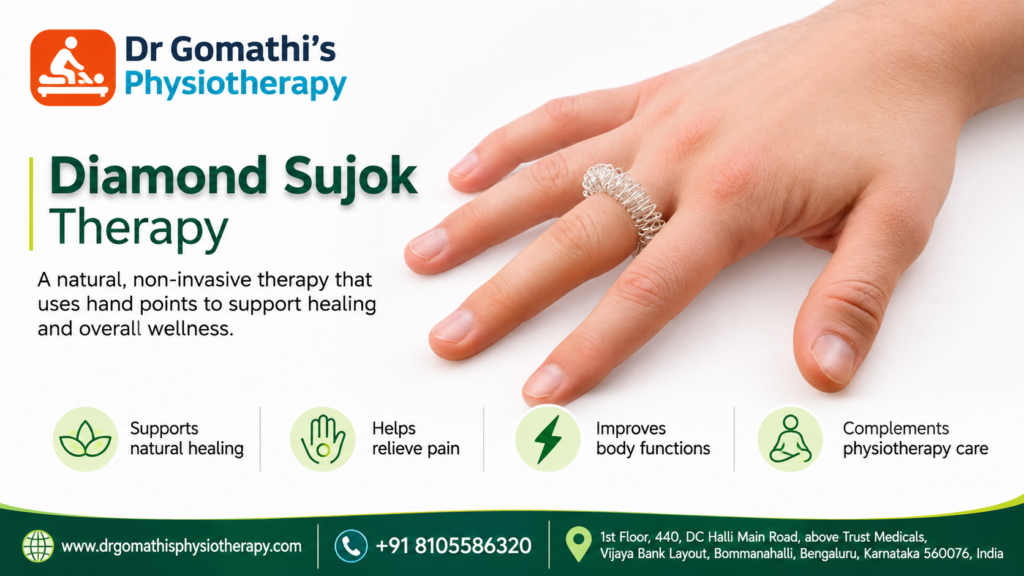
Complementary Therapy · Pain Management · Bengaluru Diamond Sujok Therapy: How It Works, Potential Benefits, and Its Role in Pain Management Discover the principles behind Sujok-based therapy, understand its potential role in supporting comfort and explore how complementary approaches can fit into a personalized physiotherapy plan. Enquire About Therapy Dr.Gomathi’s Physiotherapy clinic · Bommanahalli, Bengaluru What is Diamond Sujok Therapy, and can it help with pain management? Sujok is a complementary practice that uses selected points on the hands and feet based on a traditional correspondence system. Some practitioners use the term Diamond Sujok for particular applications of this approach. People explore these techniques for relaxation and general comfort, although scientific evidence supporting their effectiveness remains limited. Understanding the method, its possible applications and its limitations is important before considering treatment. Pain can influence almost every part of daily life. Persistent discomfort in the back, shoulders, neck, knees or hands may make routine activities more difficult. While conventional physiotherapy and medical care remain important for assessing and managing these problems, some individuals also explore complementary therapies as part of their wellness routine. One such approach is Diamond Sujok Therapy, which is associated with the broader Sujok system. Before choosing this therapy, it is helpful to understand how practitioners describe the technique, what potential benefits are discussed and why it should not replace appropriate healthcare. Understanding the Concept Behind Diamond Sujok Therapy Sujok is a complementary therapy system traditionally associated with the hands and feet. The word is commonly explained through the Korean words for hand and foot. Its central concept involves a correspondence map in which particular areas of the hands and feet are associated with different parts of the body. Practitioners use this traditional mapping system to identify points that they believe correspond to specific body regions. Depending on the practitioner and the method being used, stimulation may involve gentle pressure, massage, small tools or other non-invasive techniques. The term Diamond Sujok Therapy may be used by practitioners to describe a particular variation or application of Sujok methods. However, terminology and treatment protocols are not necessarily standardized across providers. Anyone considering this approach should ask the practitioner to explain the exact technique, equipment and level of stimulation involved. It is also important to understand that the traditional correspondence map is not an established anatomical connection. Its proposed mechanisms have not been confirmed through strong clinical evidence. How Does Diamond Sujok Therapy Work? The process generally begins with identifying an area of concern and discussing the person’s symptoms. A practitioner who follows the Sujok approach may then refer to the traditional hand or foot correspondence map to select points for stimulation. The exact procedure depends on the method being practised. Some applications involve gentle pressure using fingers, while others may use small stimulation instruments. The intensity and duration should be adjusted according to individual comfort and safety. The General Stages of a Session Initial discussion: The practitioner asks about the person’s discomfort, health background and treatment expectations. Point selection: Selected areas on the hands or feet are identified according to the practitioner’s traditional correspondence system. Gentle stimulation: The chosen areas may receive controlled pressure or another practitioner-specific form of stimulation. Comfort monitoring: The person is asked about sensitivity, irritation or discomfort during the procedure. Post-session guidance: The practitioner discusses the experience and whether further assessment or conventional healthcare is needed. This process should be explained clearly before treatment begins. A person should never feel pressured to continue a technique that causes significant discomfort. Potential Benefits of Sujok-Based Complementary Practices Interest in alternative wellness approaches has encouraged more people to explore different methods of supporting physical comfort. Some individuals report that pressure-based or relaxation-focused sessions help them feel more comfortable. However, personal experiences should not be confused with established clinical effectiveness. The commonly discussed Sujok Therapy Benefits include the following potential areas of interest: 1. Relaxation and General Comfort Gentle stimulation and focused attention during a session may provide a relaxing experience for some individuals. Taking time away from daily responsibilities and participating in a calm treatment environment can also contribute to a general sense of well-being. 2. An Additional Approach to Pain Management Some people explore Sujok as an additional wellness practice when dealing with recurring physical discomfort. However, the available research is limited, and it is not possible to promise consistent pain reduction or lasting results. 3. Greater Awareness of Physical Sensations A guided session may encourage individuals to pay closer attention to tension, tenderness and physical sensations. This awareness can be useful when discussing symptoms with a qualified healthcare professional. 4. A Complementary Wellness Experience Certain individuals prefer combining different approaches to their overall wellness routine. When appropriate, complementary techniques can be discussed alongside established rehabilitation and healthcare practices. 5. An Opportunity to Discuss Lifestyle Habits Conversations during a therapy appointment may also encourage people to think about movement, activity levels, rest and other lifestyle factors that influence everyday comfort. Important evidence note: Research on Sujok is still developing. A 2021 retrospective study involving 46 participants reported changes in pain scores following Sujok sessions, but its design and small sample size do not establish that the therapy is effective for everyone. More rigorous research is needed before making firm clinical conclusions. Research reference: Su Jok as a complementary therapy for reducing level of pain . Exploring Sujok Therapy for Pain Relief Physical discomfort can arise from several causes, including muscle strain, joint problems, repetitive movements, injuries and certain medical conditions. Identifying the reason behind the symptoms is more important than choosing a therapy based only on where the pain occurs. Some people consider Sujok Therapy for Pain Relief because they are interested in complementary approaches that may support their overall comfort. It is useful to consider the following situations separately: Back discomfort: Persistent lower back pain needs an appropriate assessment to understand possible muscular, joint-related or other contributing factors. Neck and shoulder tension: Work habits, prolonged screen use, movement limitations and muscular factors may contribute to discomfort.