
Dry Needling Therapy in Bengaluru: How It Works, Benefits, Side Effects and Who Needs It

Dry Needling Physiotherapy · Bengaluru Dry Needling Therapy in Bengaluru: How It Works, Benefits, Side Effects and Who Needs It Discover how dry needling is used in physiotherapy, what the treatment involves, its possible benefits and risks, and when professional assessment may be helpful. Book Your Consultation Bommanahalli, Bengaluru | +91 81055 86320 Can dry needling help with muscle pain and stiffness? Dry needling is a treatment technique that may help some people manage musculoskeletal pain and movement restrictions. If you are exploring Dry Needling Therapy in Bengaluru , understanding how it works, its limitations and possible side effects can help you make an informed decision. At Dr.Gomathi’s Physiotherapy clinic, patients can enquire about physiotherapy assessment and whether dry needling may be suitable for their individual condition. What Is Dry Needling Therapy? Dry needling is a technique used by appropriately trained healthcare professionals to address certain musculoskeletal problems. It involves inserting thin, sterile, single-use needles into selected muscles or other soft tissues after a clinical assessment. The word “dry” means that no medication or fluid is injected through the needle. Unlike an injection, the technique uses a solid filament needle. Dry needling is sometimes used to target sensitive areas within muscles, often called myofascial trigger points. These areas may be associated with tenderness, muscle discomfort or restricted movement. However, muscle pain can have several causes. Dry needling is not appropriate for every painful muscle, and it should not replace a complete assessment or an active rehabilitation programme. How Does Dry Needling Therapy Work? Dry needling aims to influence pain sensitivity and muscle-related symptoms through the mechanical stimulation of selected tissues. Researchers have proposed several mechanisms, including changes in local tissue responses and the way the nervous system processes pain signals. However, the precise mechanisms are not fully understood. During treatment, some people experience a brief muscle twitch, while others notice a mild aching sensation. A twitch response is not required for every treatment to be useful. The potential effect depends on the condition, the selected treatment area and the patient’s response. For some musculoskeletal problems, dry needling may provide short-term symptom relief, but evidence for long-term benefits is less certain. What Happens During a Dry Needling Physiotherapy Session? A dry needling appointment should begin with an assessment rather than immediately inserting needles. The clinician needs to understand your symptoms, medical history and treatment goals. If you are considering Dry Needling Physiotherapy in Bengaluru , a typical clinical process may involve the following steps. Initial consultation. The physiotherapist discusses your symptoms, previous injuries, medical conditions and activities that aggravate your discomfort. Physical assessment. Relevant movement, muscle tenderness, strength and functional limitations may be evaluated. Safety screening and consent. The clinician checks for possible contraindications, explains expected sensations and risks, and obtains informed consent. Needle application. Sterile, single-use needles are inserted into carefully selected areas using appropriate anatomical and infection-control precautions. Monitoring your response. The clinician observes your comfort and any unusual symptoms during treatment. Aftercare and rehabilitation. You may receive advice about temporary soreness, activity modification, therapeutic exercises and follow-up care. Treatment duration and needle placement vary. The clinician should explain why dry needling is being considered and how it fits into your broader rehabilitation plan. Potential Benefits of Dry Needling Therapy Dry needling has been studied for several musculoskeletal pain conditions. Some research suggests that it may help with short-term pain reduction and certain movement outcomes, although results differ between studies and patient groups. 1. Short-Term Muscle Pain Relief Some people experience reduced muscle-related pain after treatment. The degree and duration of improvement vary, and relief is not guaranteed. 2. Improved Movement Comfort When muscle tenderness contributes to movement difficulties, reducing discomfort may make certain activities easier. This does not necessarily mean that the underlying cause has been fully resolved. 3. Support for Rehabilitation In selected cases, dry needling may be used alongside strengthening, mobility exercises and movement education to support an overall physiotherapy programme. 4. Management of Myofascial Pain Dry needling is commonly investigated for myofascial pain, which involves discomfort associated with muscles and surrounding tissues. Its usefulness depends on accurate assessment and the individual’s clinical presentation. 5. An Additional Treatment Option Dry needling may be considered when a physiotherapist believes it could complement other appropriate treatment methods. It is not a replacement for exercise, education or medical care when needed. Important: Dry needling does not produce the same results for everyone. Evidence is stronger for some short-term outcomes than for lasting improvements. Treatment decisions should consider your condition, preferences, medical history and available alternatives. Which Conditions May Be Considered for Dry Needling? A physiotherapist may consider dry needling for selected musculoskeletal conditions when examination findings suggest that muscle-related symptoms are contributing to the problem. Neck and shoulder discomfort: Some muscle-related pain conditions affecting the neck and shoulders may be assessed for dry needling. Upper back muscle pain: Selected muscular symptoms may be considered, although needling near the chest requires particular safety precautions. Lower back discomfort: Dry needling may be considered as an additional option for some patients, depending on the assessment findings. Myofascial pain: Tender or sensitive muscle areas may be evaluated as part of a wider treatment plan. Exercise-related muscle symptoms: Some people recovering from sports or exercise-related problems may be assessed for suitable physiotherapy interventions. Movement-related muscle discomfort: Treatment may be considered when symptoms interfere with normal physical activity. Not every condition listed above requires dry needling. In many cases, appropriate exercise, load management, education and other physiotherapy approaches may be more useful. Who May Benefit From Dry Needling Therapy? Dry needling may be considered for adults experiencing certain muscle-related pain problems when a qualified clinician determines that the potential benefits outweigh the risks. People who may seek an assessment include office workers with recurring muscular discomfort, physically active individuals with persistent muscle tenderness, and patients whose movement is limited by selected musculoskeletal symptoms. However, the presence of pain or stiffness alone does not establish that dry needling is necessary. If you are looking for
How Physiotherapy Helps After a Fracture: Mobility, Strength and Safe Return to Daily Activities
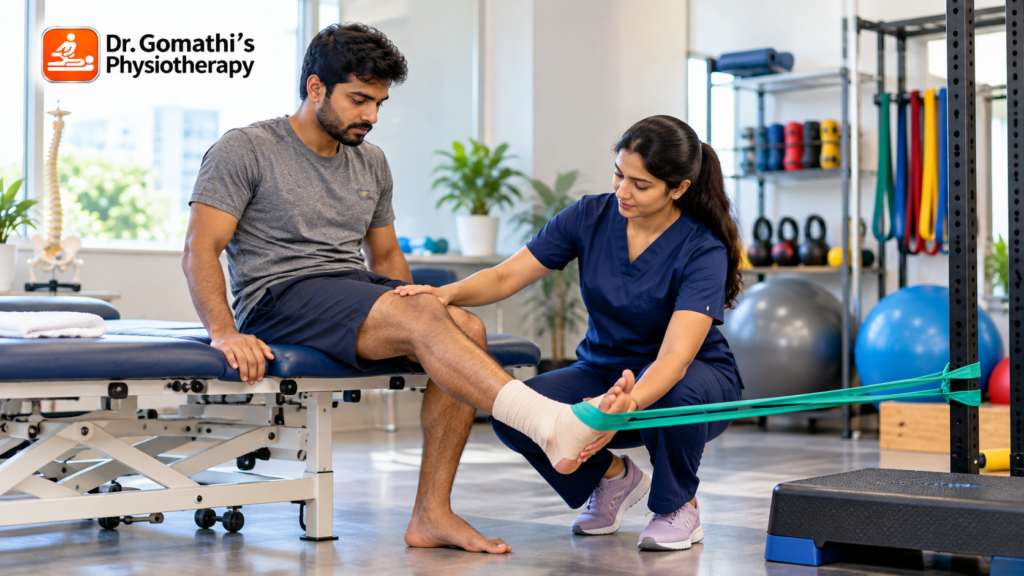
Fracture Recovery · Bommanahalli, Bengaluru How Physiotherapy Helps After a Fracture: Mobility, Strength and Safe Return to Daily Activities A fracture can affect more than the injured bone. Learn how guided rehabilitation may help restore movement, rebuild strength and prepare you for everyday activities after medical clearance. Enquire About Physiotherapy Dr. Gomathi’s Physiotherapy · Bengaluru Recovering from a fracture takes time. After a bone has been treated with a cast, brace, surgical procedure or another form of immobilisation, you may notice stiffness, reduced strength, swelling or difficulty moving the affected limb. Once your treating doctor confirms that rehabilitation can begin, Physiotherapy Treatment in Bommanahalli can help you work towards recovering movement and function through a plan suited to your injury and stage of healing. The aim of fracture rehabilitation is not to rush recovery. It is to gradually help the affected area tolerate movement and everyday demands while respecting the healing bone and any medical restrictions. The appropriate exercises depend on the type of fracture, whether surgery was required, the stage of healing and your clinician’s advice. Why Can Daily Activities Feel Difficult After a Fracture? When a bone fractures, treatment often includes a period of protection or reduced movement. This is important for healing, but limited use of a limb can also affect the surrounding muscles, joints and soft tissues. Once movement is permitted, ordinary tasks may feel more difficult than they did before the injury. For example, a person recovering from an ankle fracture may find walking or climbing stairs challenging. After a wrist fracture, holding a cup, opening a jar or writing may feel uncomfortable. A shoulder injury can make dressing or reaching overhead difficult, while a leg fracture may affect balance and confidence when standing. These difficulties vary from person to person. They do not necessarily mean the fracture is healing poorly, but persistent, unexpected or worsening symptoms should be discussed with the treating medical professional. What Does Physiotherapy Do After a Fracture? Physiotherapy after a fracture focuses on the movement and functional problems that remain during recovery. The physiotherapist considers the injured area, current mobility, strength, balance and the activities you need to resume. Restoring joint movement: Guided exercises may help address stiffness in joints affected by immobilisation, where movement has been cleared. Rebuilding muscle strength: Progressive exercises may help recover strength lost during a period of reduced activity. Managing swelling and stiffness: Appropriate positioning, movement and other recommended strategies may help manage symptoms. Improving balance: When suitable, rehabilitation can address balance and coordination, especially after lower-limb injuries. Practising functional tasks: Exercises can be tailored towards walking, dressing, lifting light objects or other daily activities. Supporting confidence: Clear guidance helps you understand how to progress activity without ignoring medical restrictions. The right programme is individualised. Exercises that are appropriate after one fracture may be unsuitable for another, so avoid starting strengthening, stretching or weight-bearing exercises without clearance from the treating clinician. Stages of Fracture Rehabilitation There is no single timetable that suits every fracture. Rehabilitation usually progresses according to the type of injury, treatment method, medical findings and how you respond to activity. 1. Protection and Early Recovery During the early stage, the priority is protecting the injured bone and following the treatment plan. Depending on the injury, your doctor may recommend a cast, brace, surgery, restricted movement or a specific weight-bearing limit. Physiotherapy during this phase, when prescribed or permitted, may focus on safe movement of unaffected areas, practical advice and exercises that do not compromise the injury. Do not remove a cast or brace or change restrictions without medical instructions. 2. Gradual Return of Movement Once movement is allowed, gentle exercises may help improve flexibility and joint mobility. The location of the fracture determines which movements are appropriate. For some injuries, exercises begin while protection is still required; others need a longer period before the affected area can be moved. Movement should follow the advice provided for your fracture. Sharp pain, a sudden increase in swelling or other unexpected symptoms should not be ignored. 3. Strength and Functional Training As healing progresses and your medical team permits increased activity, rehabilitation may introduce progressive strengthening. Exercises may begin with light resistance or controlled movements and advance as your tolerance improves. For a lower-limb fracture, this phase may eventually involve suitable standing or walking exercises. For an upper-limb fracture, rehabilitation may focus on grip, reaching or controlled arm movements. The goal is to improve function without placing excessive demands on the healing bone. 4. Returning to Everyday Activities The next stage focuses on the movements you need for your daily routine. These may include walking on different surfaces, climbing stairs, preparing meals, carrying appropriate loads or returning to work-related tasks. Your physiotherapist can help identify which activities are suitable at each stage and how to build towards more demanding tasks. Return to sport, heavy lifting or physically demanding work may require additional assessment and specific clearance. Common Problems Physiotherapy May Address After a Fracture Joint Stiffness A cast, brace or reduced movement can make nearby joints feel stiff. Where permitted, gradual mobility exercises may help restore movement. Progress should remain within the restrictions provided for your particular injury. Muscle Weakness Muscles can lose strength when they are used less during recovery. Appropriate strengthening helps rebuild capacity for everyday tasks. Resistance, repetitions and exercise difficulty should increase gradually according to healing progress and medical advice. Swelling and Discomfort Some swelling or discomfort may occur during recovery, but the pattern matters. Your medical team can explain what is expected for your injury and how to manage symptoms safely. Rapidly increasing swelling, severe pain, new numbness or changes in skin colour or temperature need prompt medical attention. Balance and Walking Difficulties After a leg, ankle or foot fracture, reduced activity can affect walking confidence and balance. Once weight-bearing is allowed, physiotherapy may include gait training, balance exercises and gradual practice with the recommended walking aid. Do not begin walking without an aid or put more weight through
Best Physiotherapy Clinic in Bengaluru: 9 Important Factors to Consider Before Choosing Your Rehabilitation Centre
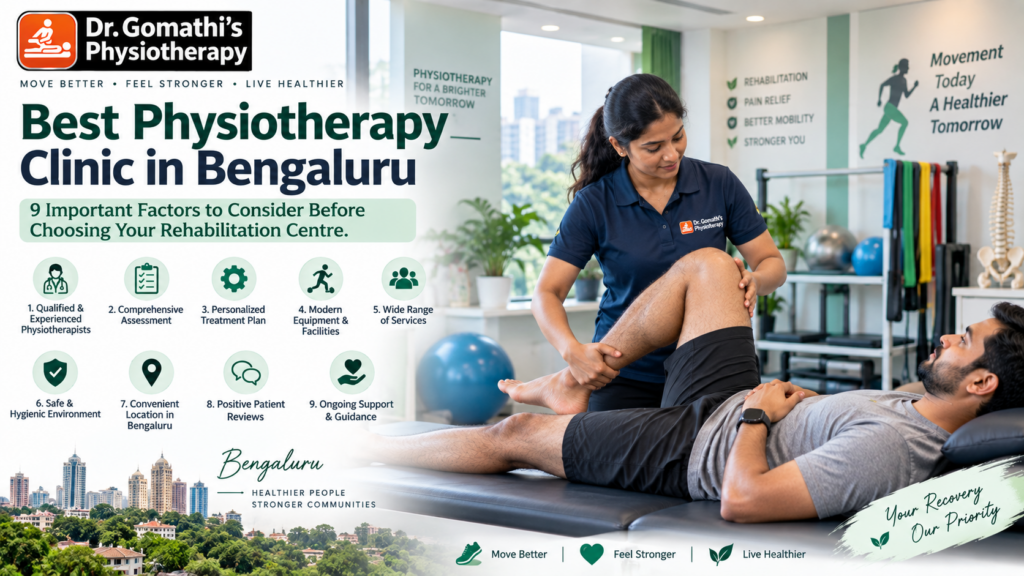
Physiotherapy & Rehabilitation · Bengaluru Best Physiotherapy Clinic in Bengaluru: 9 Important Factors to Consider Before Choosing Your Rehabilitation Centre Learn what to look for in a physiotherapy clinic, from proper assessment and personalized rehabilitation to available services, convenience and ongoing treatment support. Book Your Consultation Mon–Sat: 9 AM – 9 PM | Sun: 9 AM – 3 PM | +91 81055 86320 Choosing a physiotherapy clinic is an important step when pain, stiffness, an injury or reduced mobility begins affecting your everyday routine. The right rehabilitation environment should give attention to your individual condition rather than relying on the same treatment plan for everyone. If you are comparing options for the Best Physiotherapy Clinic in Bengaluru, looking at the assessment process, treatment options, rehabilitation approach, practitioner communication and clinic accessibility can help you make a more informed choice. Why Does the Choice of Physiotherapy Clinic Matter? Physiotherapy is not limited to a single appointment or one treatment technique. Depending on the condition, rehabilitation may involve assessment, movement work, strengthening, therapeutic exercise, education and regular progress reviews. Two people with similar symptoms may have very different physical requirements. One person may be recovering after an injury, another may have persistent stiffness from limited activity, while someone else may want support with returning to exercise. A clinic that takes time to understand these differences can make the rehabilitation plan more relevant to the person’s daily life and recovery goals. 9 Important Factors to Consider Before Choosing a Physiotherapy Centre Before booking an appointment, it is useful to compare a few practical factors. These can help you understand whether a clinic is appropriate for the type of physiotherapy and rehabilitation support you are looking for. Look for a Proper Initial Assessment A structured assessment should be one of the first things you consider. The physiotherapist may discuss your symptoms, previous injuries, daily activities and exercise routine before examining relevant movement, flexibility, mobility, strength and function. Check Whether Treatment Is Personalized A rehabilitation program should reflect your current physical condition and goals. The exercises and treatment approach may need to change as your mobility, strength or tolerance for activity improves. Consider the Clinic’s Rehabilitation Approach Find out whether the clinic focuses on long-term rehabilitation rather than concentrating only on short-term symptom management. A structured plan can include exercise, movement education, strengthening and gradual progression. Review the Services Available Different people may require different forms of physiotherapy. Check whether the clinic offers relevant treatment options that match your needs and whether additional therapies are available when appropriate. Ask About Practitioner Communication You should feel comfortable asking questions about your condition, treatment and exercises. Clear explanations can make it easier to understand the purpose of each part of the rehabilitation process. Consider Progress Monitoring Rehabilitation is not always a straight line. A useful treatment plan can be reviewed and modified according to changes in symptoms, movement, strength and everyday function. Check the Clinic’s Location Convenience can make regular appointments easier to maintain. Consider how practical the clinic is from your home, workplace or daily travel route. Review Appointment Availability A clinic with appointment times that fit your schedule may make it easier to maintain consistency throughout the rehabilitation process. Understand the Overall Treatment Plan Before starting, ask how the physiotherapist expects the rehabilitation process to work, what your role will be between appointments and how progress will be reviewed. Why Is Personalized Physiotherapy Important? Personalization matters because every person’s physical condition is different. Age, activity level, work routine, previous injuries, mobility and recovery goals can all influence the way treatment is planned. For example, an office worker who spends many hours sitting may need a different rehabilitation strategy from an individual returning to sports after an injury. Someone with reduced mobility may also have different goals from a person who wants to improve strength and movement confidence. A personalized approach allows the physiotherapist to select exercises and treatment methods according to the individual’s requirements instead of following one fixed routine. What Can You Expect From an Advanced Physiotherapy Clinic in Bengaluru? When searching for an Advanced Physiotherapy Clinic in Bengaluru, it is useful to focus on the quality of the overall rehabilitation process rather than the label alone. An appropriate physiotherapy program may include detailed assessment, therapeutic exercise, mobility work, strengthening, movement education and other techniques selected according to the person’s needs. At Dr. Gomathi’s Physiotherapy, the treatment approach is centered around personalized physiotherapy and rehabilitation based on individual symptoms, physical assessment and recovery requirements. What Services Should a Physiotherapy Clinic Offer? The services available at a physiotherapy clinic can be another useful point of comparison. Depending on your individual condition, treatment may involve exercise-based rehabilitation together with other physiotherapy techniques. According to the supplied clinic information, Dr. Gomathi’s Physiotherapy provides physiotherapy and rehabilitation along with additional therapy options. Personalized physiotherapy assessment Therapeutic exercise and rehabilitation Mobility and strengthening support Dry Needling IASTM Therapy Acupuncture Reflexology Cupping and wellness-focused services Not every treatment is appropriate for every individual. The suitability of a particular therapy should be discussed with the treating professional after considering your condition. How Does a Physiotherapy Assessment Usually Work? The first assessment can provide useful information about your physical condition and help determine the direction of your rehabilitation. Discuss your main concern. You may be asked when the problem began, what activities affect it and how it is influencing your normal routine. Review your lifestyle and activity. Your work routine, exercise habits, previous injuries and daily movement may be considered as part of the assessment. Evaluate relevant physical factors. Depending on your condition, the physiotherapist may assess movement, flexibility, mobility, strength and function. Build an individual plan. The treatment and exercises can then be selected around your present physical needs and recovery objectives. Monitor your response. Your rehabilitation plan can be adjusted as your symptoms and physical abilities change. Why Should Exercise Be Part of Rehabilitation? Exercise can play an important role in rehabilitation because improving physical capacity often requires gradual