Sports Injury Physiotherapy in Bommanahalli: Recovery, Rehabilitation and Returning to Sports Safely
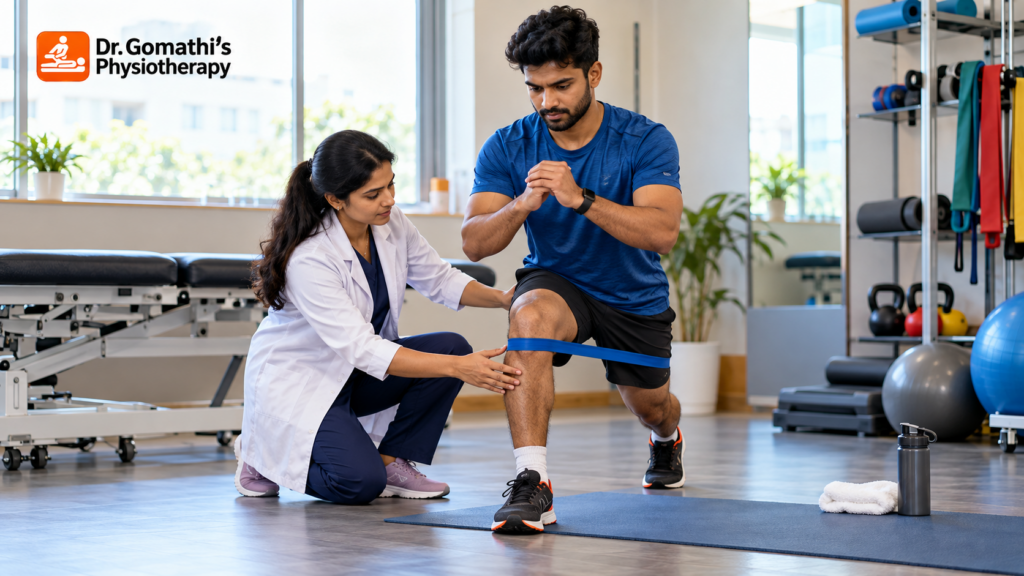
Sports Rehabilitation · Bommanahalli, Bengaluru Sports Injury Physiotherapy in Bommanahalli: Recovery, Rehabilitation and Returning to Sports Safely Understand common sports injuries, discover how physiotherapy can support recovery, and learn what it takes to return to training with greater strength and confidence. Book a Physiotherapy Consultation Dr. Gomathi’s Physiotherapy · Bengaluru A sports injury can interrupt your exercise routine, affect your performance and make even ordinary movements uncomfortable. Whether you enjoy running, cricket, badminton, football, gym workouts or weekend fitness activities, recovering properly is important before returning to full training. Sports Injury Physiotherapy in Bommanahalli can help address movement limitations, rebuild strength and guide a gradual return to physical activity through an individualised rehabilitation plan. Recovery is not simply about waiting until the pain disappears. Muscles, tendons, ligaments and joints may need time and appropriate rehabilitation to regain their ability to tolerate physical demands. At Dr. Gomathi’s Physiotherapy, people can explore physiotherapy and rehabilitation services suited to their individual needs. What Are Common Sports Injuries? Sports injuries can happen to beginners as well as experienced athletes. They may result from a sudden accident, repeated stress, inadequate recovery between training sessions or a sudden increase in exercise intensity. Some injuries develop immediately, while others build gradually over time. Ankle sprains: Stretching or tearing of ligaments, often following a twist or awkward landing. Knee injuries: Pain or instability involving structures such as the ligaments, tendons or surrounding muscles. Muscle strains: Injury to muscle fibres during sprinting, lifting, jumping or sudden changes in direction. Tendon problems: Irritation associated with repetitive loading, which may affect areas such as the Achilles tendon or shoulder. Shoulder injuries: Discomfort associated with throwing, swimming, overhead exercise or repetitive upper-body movements. Overuse injuries: Problems that develop when repeated physical stress exceeds the body’s capacity to recover. The right treatment depends on the injured structure, the severity of the problem and your medical history. A professional assessment helps determine whether physiotherapy is appropriate or whether further medical investigation is required. When Should You Seek Sports Injury Physiotherapy? Some minor aches improve with appropriate rest and a temporary adjustment to activity. However, persistent symptoms should not be ignored, particularly when they affect walking, lifting, running or other routine movements. Consider arranging an assessment when you experience: Pain that continues or repeatedly returns during exercise. Reduced joint movement or difficulty using the affected limb. Stiffness or weakness that affects sports performance. Difficulty regaining balance, coordination or confidence after an injury. Discomfort that prevents you from returning to your normal training routine. Repeated injuries in the same area. Important safety advice: Seek urgent medical attention for a suspected fracture, obvious deformity, severe swelling after an injury, inability to bear weight, a hot and red joint with fever, or sudden severe pain. A joint that becomes locked or a limb that becomes numb, cold or discoloured also needs prompt assessment. Do not attempt to exercise through a potentially serious injury. How Physiotherapy Supports Sports Injury Recovery Physiotherapy aims to improve function rather than focusing only on the location of pain. The rehabilitation approach depends on the diagnosis, the stage of recovery and the movements required for your sport. 1. Assessment and Injury Understanding Your physiotherapist may ask how the injury occurred, which movements aggravate your symptoms and how the problem affects your daily activities. An appropriate physical assessment may examine movement, flexibility, strength, balance and functional ability. If the injury requires medical investigation, referral may be recommended. 2. Managing Pain and Movement Limitations Early rehabilitation may involve modifying activities, maintaining suitable movement and using selected treatment techniques to help manage symptoms. The aim is to avoid unnecessary strain while maintaining as much safe function as possible. People searching for Pain relief physiotherapy near me should look for care that considers the cause of the symptoms and provides guidance for recovery, rather than relying only on temporary pain relief. 3. Restoring Strength and Flexibility After an injury, reduced activity can lead to muscle weakness, stiffness and lower exercise tolerance. Depending on your condition, rehabilitation exercises may target the affected muscles, improve joint mobility and strengthen supporting areas. Exercises should be selected and progressed according to your ability. Increasing resistance or training volume too quickly may aggravate symptoms, so a gradual approach is generally more appropriate. 4. Improving Balance and Coordination Balance, coordination and control are important for running, jumping, landing and changing direction. When appropriate, rehabilitation may include single-leg balance tasks, controlled stepping, movement drills and sport-related exercises. These activities help prepare you for the physical demands of your sport as your capacity improves. They should be introduced at a suitable stage rather than immediately after a significant injury. 5. Preparing for a Safe Return to Sport Being able to walk comfortably does not always mean you are ready to sprint, jump, tackle or compete. Your recovery plan may gradually introduce more demanding activities as pain, strength, mobility and functional performance improve. A structured physiotherapy and rehabilitation programme can help you work towards the physical demands of your chosen activity. What Happens During Physiotherapy Treatment in Bommanahalli? The process varies according to the injury, but a typical rehabilitation journey may include several stages. Your physiotherapist can adjust these stages depending on your symptoms and progress. Initial consultation: Discuss the injury, previous treatment, health history and personal recovery goals. Physical assessment: Evaluate relevant movements, strength, flexibility and functional limitations. Individual treatment plan: Identify suitable exercises, activity modifications and other appropriate treatment options. Progressive rehabilitation: Increase exercise difficulty and functional demands according to your response. Return-to-sport assessment: Review whether you can perform the movements and training tasks required for your activity. Injury prevention guidance: Discuss workload management, recovery habits and appropriate strengthening exercises. If you need Physiotherapy treatment in Bommanahalli, the most useful starting point is an assessment that identifies your current limitations and helps establish realistic recovery goals. How to Return to Sports Without Rushing Recovery Returning to sport too early may increase the risk of aggravating an injury or experiencing another problem. On the other