
How Physiotherapy Helps After a Fracture: Mobility, Strength and Safe Return to Daily Activities
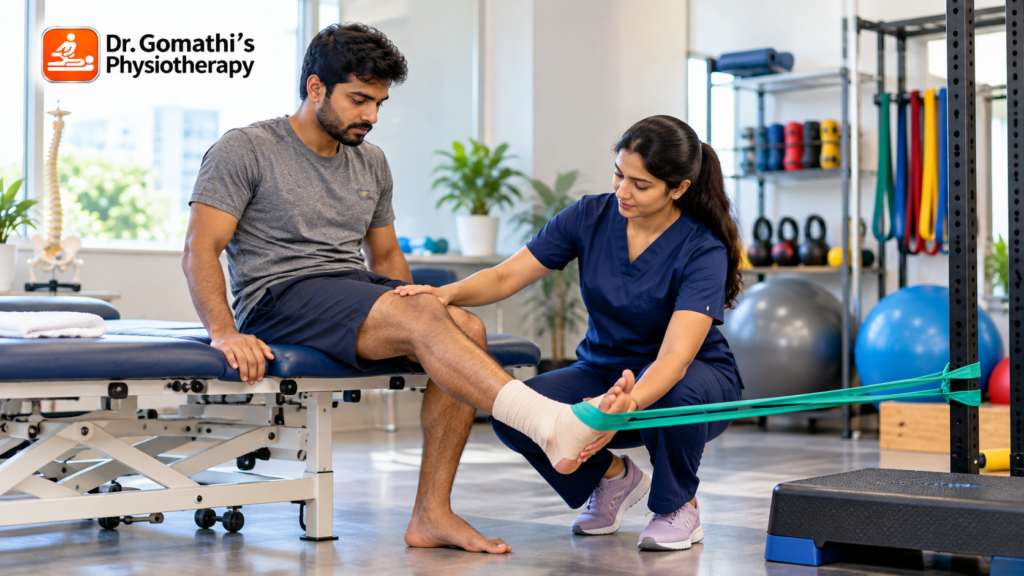
Fracture Recovery · Bommanahalli, Bengaluru How Physiotherapy Helps After a Fracture: Mobility, Strength and Safe Return to Daily Activities A fracture can affect more than the injured bone. Learn how guided rehabilitation may help restore movement, rebuild strength and prepare you for everyday activities after medical clearance. Enquire About Physiotherapy Dr. Gomathi’s Physiotherapy · Bengaluru Recovering from a fracture takes time. After a bone has been treated with a cast, brace, surgical procedure or another form of immobilisation, you may notice stiffness, reduced strength, swelling or difficulty moving the affected limb. Once your treating doctor confirms that rehabilitation can begin, Physiotherapy Treatment in Bommanahalli can help you work towards recovering movement and function through a plan suited to your injury and stage of healing. The aim of fracture rehabilitation is not to rush recovery. It is to gradually help the affected area tolerate movement and everyday demands while respecting the healing bone and any medical restrictions. The appropriate exercises depend on the type of fracture, whether surgery was required, the stage of healing and your clinician’s advice. Why Can Daily Activities Feel Difficult After a Fracture? When a bone fractures, treatment often includes a period of protection or reduced movement. This is important for healing, but limited use of a limb can also affect the surrounding muscles, joints and soft tissues. Once movement is permitted, ordinary tasks may feel more difficult than they did before the injury. For example, a person recovering from an ankle fracture may find walking or climbing stairs challenging. After a wrist fracture, holding a cup, opening a jar or writing may feel uncomfortable. A shoulder injury can make dressing or reaching overhead difficult, while a leg fracture may affect balance and confidence when standing. These difficulties vary from person to person. They do not necessarily mean the fracture is healing poorly, but persistent, unexpected or worsening symptoms should be discussed with the treating medical professional. What Does Physiotherapy Do After a Fracture? Physiotherapy after a fracture focuses on the movement and functional problems that remain during recovery. The physiotherapist considers the injured area, current mobility, strength, balance and the activities you need to resume. Restoring joint movement: Guided exercises may help address stiffness in joints affected by immobilisation, where movement has been cleared. Rebuilding muscle strength: Progressive exercises may help recover strength lost during a period of reduced activity. Managing swelling and stiffness: Appropriate positioning, movement and other recommended strategies may help manage symptoms. Improving balance: When suitable, rehabilitation can address balance and coordination, especially after lower-limb injuries. Practising functional tasks: Exercises can be tailored towards walking, dressing, lifting light objects or other daily activities. Supporting confidence: Clear guidance helps you understand how to progress activity without ignoring medical restrictions. The right programme is individualised. Exercises that are appropriate after one fracture may be unsuitable for another, so avoid starting strengthening, stretching or weight-bearing exercises without clearance from the treating clinician. Stages of Fracture Rehabilitation There is no single timetable that suits every fracture. Rehabilitation usually progresses according to the type of injury, treatment method, medical findings and how you respond to activity. 1. Protection and Early Recovery During the early stage, the priority is protecting the injured bone and following the treatment plan. Depending on the injury, your doctor may recommend a cast, brace, surgery, restricted movement or a specific weight-bearing limit. Physiotherapy during this phase, when prescribed or permitted, may focus on safe movement of unaffected areas, practical advice and exercises that do not compromise the injury. Do not remove a cast or brace or change restrictions without medical instructions. 2. Gradual Return of Movement Once movement is allowed, gentle exercises may help improve flexibility and joint mobility. The location of the fracture determines which movements are appropriate. For some injuries, exercises begin while protection is still required; others need a longer period before the affected area can be moved. Movement should follow the advice provided for your fracture. Sharp pain, a sudden increase in swelling or other unexpected symptoms should not be ignored. 3. Strength and Functional Training As healing progresses and your medical team permits increased activity, rehabilitation may introduce progressive strengthening. Exercises may begin with light resistance or controlled movements and advance as your tolerance improves. For a lower-limb fracture, this phase may eventually involve suitable standing or walking exercises. For an upper-limb fracture, rehabilitation may focus on grip, reaching or controlled arm movements. The goal is to improve function without placing excessive demands on the healing bone. 4. Returning to Everyday Activities The next stage focuses on the movements you need for your daily routine. These may include walking on different surfaces, climbing stairs, preparing meals, carrying appropriate loads or returning to work-related tasks. Your physiotherapist can help identify which activities are suitable at each stage and how to build towards more demanding tasks. Return to sport, heavy lifting or physically demanding work may require additional assessment and specific clearance. Common Problems Physiotherapy May Address After a Fracture Joint Stiffness A cast, brace or reduced movement can make nearby joints feel stiff. Where permitted, gradual mobility exercises may help restore movement. Progress should remain within the restrictions provided for your particular injury. Muscle Weakness Muscles can lose strength when they are used less during recovery. Appropriate strengthening helps rebuild capacity for everyday tasks. Resistance, repetitions and exercise difficulty should increase gradually according to healing progress and medical advice. Swelling and Discomfort Some swelling or discomfort may occur during recovery, but the pattern matters. Your medical team can explain what is expected for your injury and how to manage symptoms safely. Rapidly increasing swelling, severe pain, new numbness or changes in skin colour or temperature need prompt medical attention. Balance and Walking Difficulties After a leg, ankle or foot fracture, reduced activity can affect walking confidence and balance. Once weight-bearing is allowed, physiotherapy may include gait training, balance exercises and gradual practice with the recommended walking aid. Do not begin walking without an aid or put more weight through